
At Flip Education, the AI co-teacher that plans lessons for teachers, we were two founders. I ran the search program, with AI agents doing the work a small team normally does; my co-founder carried pedagogy. In the peak month about 16,000 visits came from search engines, and the traffic fed the rest of the business. Real visitors to learn from, problems to fix early, survey answers from many countries, and enough volume to test things and decide quickly.
Search · Flip Education · Feb–Aug 2026
All work- about 16,000visits from search engines in the peak month, run by one person where a small team would cost about €6,000 to €9,500 a month
- 517survey answers from visitors in 17 countries, 81% first arriving through search or AI answers, so search brought in most of the people who told us what they needed
- about 235Bing visits per day in September 2026, now the program's main search channel
What made this possible
Most of the jobs a search program needs are now jobs AI agents can do, and how to run a good one is written down in public, so a company can run one without first hiring the people it used to need. The program covered the jobs a search team does, and agents did each one. Curriculum data and verified numbers fed the research and the pages, the technical side sent them to Google, Bing and AI answer engines (chat assistants that answer a question and cite web pages), and a daily job and an agent watched the numbers. Nothing went live without passing the checks, and what they found shaped the next topics.
The challenge
I'd spent about seven years selling data and analytics products to the SEO industry, and earlier I'd managed a content marketing and SEO program, so I knew the field. I was never a practitioner, though. The bet was simple. Could I take what I knew and, with AI agents, close the gap to what a practitioner knows?
The constraint was real. A proper search program takes two or three people. In Europe that is around €6,000 to €9,500 a month. An agency charges a similar monthly fee. What was at stake was our reputation if we published low-quality AI text, and a slower company if we did nothing.
What the program was
First, AI agents sorted real search queries by what the searcher wanted and joined each kind to what visitors then did, so we knew what searchers did on arrival. Agents built the pages per topic and grade, in each country's own language. Data pages tied every number to one verified record. Tests on the main jobs decided which AI model did the work.
Automatic checks, some scripts and some AI models, caught wrong citations. Failed work wasn't published. Before anything shipped, an audit checked the research citations the AI had written against the real papers. Every incident became a new check. Agents built the technical side into every page, and a daily job sent new pages to Bing.
A daily job saved Google's numbers and the analytics tool counted what visitors did. A statistical alarm flagged drops outside its normal range, and an agent found the cause. Once agents had tested the cause, I decided what to change. Later, only non-routine releases, spending and messages to people outside the company came to me, the calls that changed direction.
- 1
AI agents
They sorted real searches by what the searcher wanted
So pages went where people were searching
Claude CodeSearch Console
 DataForSEOPostHog
 - 2
AI agents
They built the curriculum pages, articles and data pages
The main jobs ran on models chosen by testing
Claude CodeNext.jsscripts
- 3
Automatic checks
Everything had to pass before it went live
Not published
scriptsGeminiClaude
- 4
AI agents and a daily job
They built the technical side into every page as one standard
A daily job sent new pages to Bing
Claude CodeVercelBing Webmaster
Live pages, read by Google, Bing and AI answer engines
Search data and what visitors did
- 5
A daily job and an alarm
They saved Google's numbers and flagged a drop outside its normal range
So every alert could be checked and explained
An AI agent
It found the cause
scriptsSearch ConsolePostHogClaude Code
What the agent found
- 6
Me
I decided what to change
A fix or a new check, back to the checks
Shared data
Product data
curriculum of 18 countries; anonymised lessons
Verified numbers
one record per number: source, year, date checked
Makes
reads Product data
Topic research
what teachers search for
Curriculum pages
a page per topic and grade, in each country's language
Article line
researched and fact-checked articles, in English and 10 more languages
reads Verified numbers
Data pages
numbers others can cite
reads Verified numbers
Goes live
Checks
nothing goes live until it passes
Technical SEO
sitemaps, structured data, redirects; new pages to Bing daily
plan without Google, feed Bing daily
Search engines
Google, Bing and AI answer engines
+ from Digital PR: links and mentions
Search visits
about 16,000 in the peak month (May 2026)
Watches
Search desk
collects the numbers every day
Daily search archive
Alarm and diagnosis
flags a drop outside its normal range, then finds the cause
test each explanation before believing it
a cause, then a fix or a new check: back to the checks
Recovery loop
after Google dropped the curriculum pages
asks me only for releases beyond routine ones, spend and outbound sends
Across jobs
Model testing
which AI model does each job, tested blind
the grader never comes from the writer's model family
Topic research
Sorts real searches by what the person wants, and finds the curriculum topics worth a page.
Curriculum pages
One page per topic and grade, built from the product's own curriculum data.
Article line
An article moves forward only when it passes each check.
Data pages
Each number lives once, in a verified record; every page and pitch reads it from there.
Technical SEO
Google gets a chosen core set, Bing gets every page.
Digital PR
The digital PR desk has its own page. Here, only how its links and mentions help search.
Search desk, alarm and diagnosis
Collects the numbers every day, flags a drop outside its normal range, then looks for the cause.
Model testing
Several AI models do the same job; a grader who never sees their names picks one.
Recovery loop
After Google dropped the curriculum pages, a written target and a loop that keeps shipping.
The product's curriculum data feeds research and the curriculum pages; the verified numbers feed the data pages, the fact check and the PR pitches; the daily search archive feeds the alarm and the diagnosis; everything that goes live passes the checks first.
Choosing a model per job
The method improved as we used it. A near-miss model gets a second chance before a winner is picked. In the test for the curriculum pages, a cheaper model lost on formatting, not writing. After the second chance it took the job. The model that had won the first round would have cost roughly seven times as much.
The peak and the fall
The rise was fast. Our pages appeared in Google results 32,015 times in February 2026 and about a million times a month by April. Then, after a Google update in late May, visits from Google fell 96% in one week. By late June almost all the pages we had built per topic and grade were gone from Google's results.
Visits a week from search engines
A line chart of weekly visits from all search engines, from March 2026 to the latest week. The line starts at about 600 visits in early March and climbs to a peak of about 5,000 in May. A dotted vertical line marks the Google update in late May. Right after it, visits fall to about 750 in one week and about 400 by July. From late August the line rises again, passing 2,000 a week in September.
Show the numbers
| Week | Search engines |
|---|---|
| Week 1 of March | 585 |
| Week 2 of March | 688 |
| Week 3 of March | 612 |
| Week 4 of March | 1,166 |
| Week 5 of March | 2,755 |
| Week 1 of April | 3,165 |
| Week 2 of April | 3,293 |
| Week 3 of April | 3,963 |
| Week 4 of April | 4,419 |
| Week 1 of May | 5,007 |
| Week 2 of May | 4,313 |
| Week 3 of May | 4,549 |
| Week 4 of May | 749 |
| Week 1 of June | 649 |
| Week 2 of June | 581 |
| Week 3 of June | 588 |
| Week 4 of June | 548 |
| Week 5 of June | 444 |
| Week 1 of July | 441 |
| Week 2 of July | 393 |
| Week 3 of July | 447 |
| Week 4 of July | 413 |
| Week 1 of August | 436 |
| Week 2 of August | 497 |
| Week 3 of August | 575 |
| Week 4 of August | 652 |
| Week 5 of August | 950 |
| Week 1 of September | 1,968 |
| Week 2 of September | 2,069 |
| Week 3 of September | 2,295 |
| Week 4 of September | 2,633 |
Testing the explanation
Before believing any explanation, we tested it. Google's own records showed it had never downloaded just under half the pages we asked it to read, so for half of what we built, the writing can't have decided anything. Then a quality test, written down before it ran, compared pages Google kept with pages it refused, scored by a judge that never knew which group a page came from. The difference was about zero.
The best-supported explanation is a very large, very new set of templated pages on a site Google didn't know yet.
Human decisions
-
Could
Use one strongest model for every job in the program.
ChoseTest the candidate models on each main job, judged blind, and tune the winner's settings.
BecauseAt this volume, both the cost and the quality of the whole program depended on the pick.
-
Could
Cut pages, or work to get Google to list them again.
ChoseShow Google only a chosen core set, and keep giving Bing every page, every day.
BecauseOne channel still worked.
What the traffic made possible
Enough visitors changed how we worked. Recordings of real visits let us find problems early, about twenty of them. In one case an AI answer engine sent a visitor from Brazil to a Spanish curriculum page, a dead end; the recording showed it, and the fix shipped the next day. We ran split tests. People in 17 countries answered our surveys.
Bing took longer to warm up, and it's now the main search channel, still listing about 101,000 of the same pages.
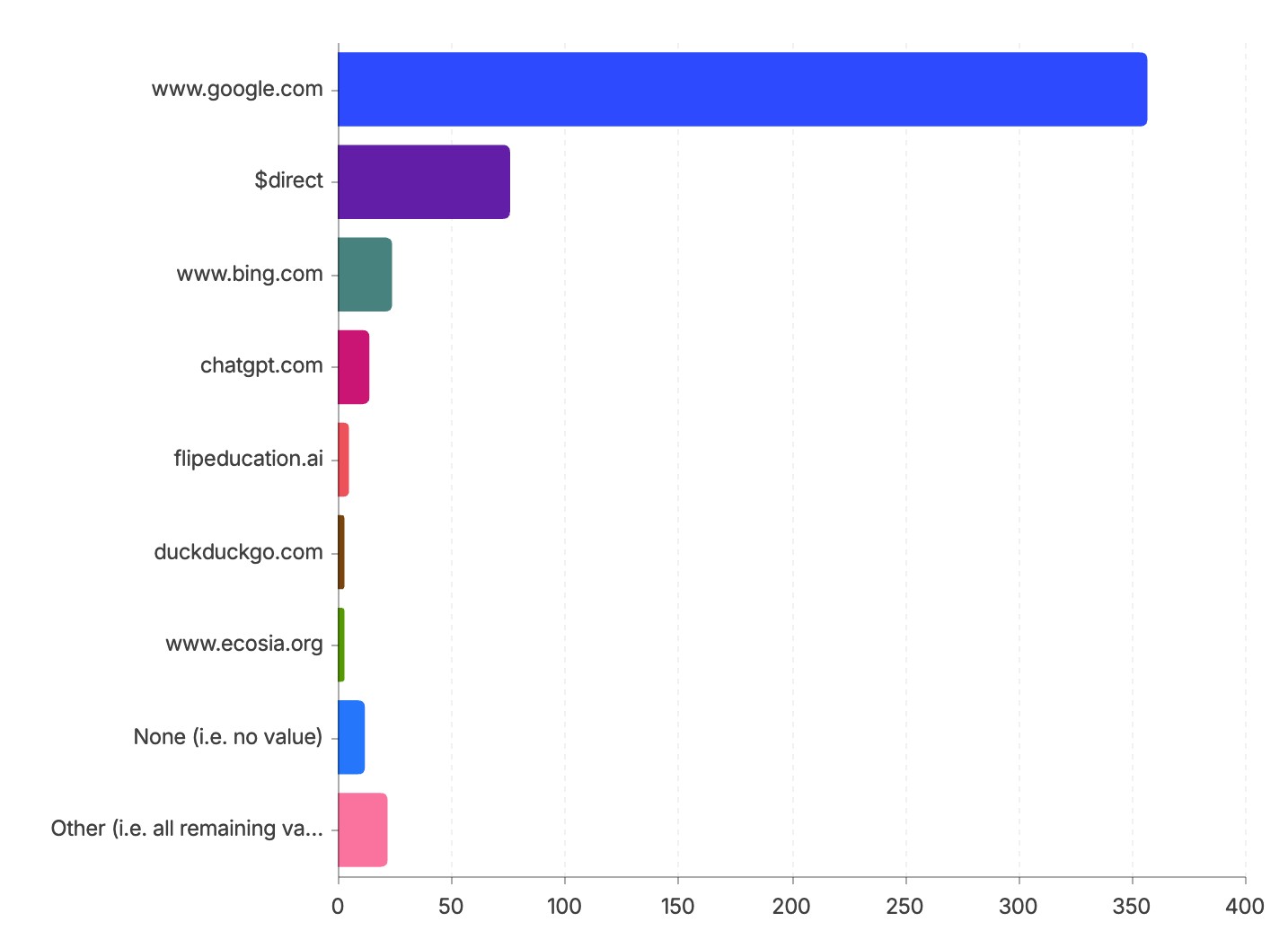
What I would tell the team that owns this work
Knowing the field still matters. I couldn't have run this without knowing the tools, the tactics and how to check an agent's work, and I'd say that holds in any field, not only search. Learn what great looks like, so you can direct your agents.
Believe in the channel. Search is one of the best returns for many brands, especially closer to consumers. Start early, because it takes a while to warm up.
Be careful with large-scale actions. Don't generate a lot of AI content at once, and I'd launch fewer markets first as a precaution. A lot works without those, technical SEO, honest digital PR, a good experience on the site, and a presence on review platforms, which matter even more now that AI answer engines choose the sources they cite.
Sources
Receipts. The stack was Google Search Console, Bing Webmaster Tools, IndexNow, PostHog, DataForSEO, Next.js, Vercel and Claude Code. An SEO specialist full time, a web developer half time and a content writer half time come to about €6,000 a month in Spain, at roughly 31% employer costs, and about €9,400 a month in Germany, at roughly 21%, before translation, PR or coordination. This is based on Glassdoor and PayScale salary data for Spain and Germany (2025 and 2026), employer-cost guides for both countries (2026) and agency pricing guides (2026), which quote multilingual, multi-market programs from about $10,000 a month upward. Traffic figures are from Google's own Search Console and our analytics; Google does not confirm such actions, so the cause of the fall remains our best-tested explanation.
- about 16,000: The site's own analytics, May 2026
- 517: Surveys on the site, March to September 2026
- about 235: The site's own analytics, September 2026
pareto-evals on GitHuboperator-skills on GitHubAll open tools