
For most of my career, how fast a company could change its website showed how fast the company could move. Changing a site meant weeks of waiting on shared specialists, and some changes we simply gave up on. At Flip Education, the AI product for lesson planning that I co-founded and ran with one other person and a team of AI agents, I removed the middle of that process. A complete homepage redesign went from request to review in three and a half hours.
Website · Flip Education, raianpollock.com, Solvue · Feb–Sep 2026
All work- 3½ hoursfrom my request to a complete, checked homepage design ready for review, against days or weeks before
- about 3 weeksfrom the start of work to the live site for the first full overhaul, in April, covering the marketing pages, curriculum pages, emails and support chat
- 1 personOne person changes the site through AI agents and the change goes live from one request. I estimate a normal company needs three or four people for the same change.
Closer to the person with the idea
AI models have collapsed this work onto the person who has the idea, giving sales and marketing teams far more control, most visible in experiments, user experience and product marketing. Newer models look at the work of older models and find many things to improve, so a website can be redesigned for the better as the models get better. One shared design system keeps the web pages, the emails, the printable lesson PDFs and the support chat window looking like one product. Between my idea and the live site there is no specialist, only the agents, the automatic checks and my review, then a count of what users do.
The challenge
Before, every change passed through people or platforms that were shared with other work. At ContentKing, a software company that watched websites for search problems, each site change went through the CEO and the developers who also built the product, so site work took hours away from the product itself. At SEOmonitor, which sells search analytics software to SEO agencies and where I was Chief Revenue and Operations Officer, changes went through marketing, but marketing could barely change the site because of the platform's limits. A normal change took days at least, most likely weeks. Once we tried to change the pricing page. The changes we wanted couldn't be made, so they were patched in with poor design. The new prices went live, but the page got worse.
Human decisions
-
Could
A CMS, the usual website editing tool, run by specialists, with outside designers and developers for any new template. Or an agentic CMS, a website editing tool with AI agents built in. But then you're still on their platform with its limits, it doesn't connect well with other technology you want to add to the site, and it gives you little freedom.
ChoseCode every part of the site from scratch with AI models, no CMS, so an idea goes straight from me to the live site.
BecauseEvery hand-off between the idea and the live site slowed us down. Remove the hand-offs and an idea goes straight to the site, with no platform's limits in the way, and the changes we used to give up on get made.
How a change reaches the site
I describe the change. AI agents then write the code for any part of the site. For a redesign they build several directions as complete pages, and I choose between real pages, not sketches. Before I see anything, scripts run automatic checks on every change, catching things like a factual claim with no source or English left on a page in another language, so my review goes to taste. I review for taste, direction and the polish of each detail. Every problem I catch in review becomes an automatic check that catches it the next time. After that the host builds and serves the whole site, and the blog and curriculum pages go out in the same build. Once a change is live, an analytics tool counts what users do there, visits, sign-ups and lessons started, and the next change starts from what users did.
Me
An idea
So the change waits in no one else's queue
the idea
AI agents
They write the code for any part of the site
So no change is limited by a page template
Claude Code
the code
Scripts
They check every change before I see it
So a mistake a script can find never reaches me
a checked change
Me
I review it for taste and polish
For a redesign, I choose between complete pages
A new check, so I never see the same problem twice
an approved change
The host
It builds and serves the whole site
VercelCloudflare
So every part of the site goes live from one place
the live pages
An analytics tool
On the live site, it counts what users do
PostHog
The result decides the next idea
One afternoon
One afternoon in September I asked for experiments to raise the homepage and the other page types to a higher level. Three and a half hours later a complete homepage design was ready for my review that evening. Within about a day, five complete homepage designs had been built and compared. I went with the chalkboard and paper direction. Paper is what makes Flip Education different, because its lessons are printed and run mostly offline, and the other directions felt too techy. I loved how it came out.
Better models, better rounds
The design improved in rounds, because the models improved. We did a first full redesign in April across the marketing pages, the emails and the support chat window. In June we built three homepage designs in a day.
The same way on other sites
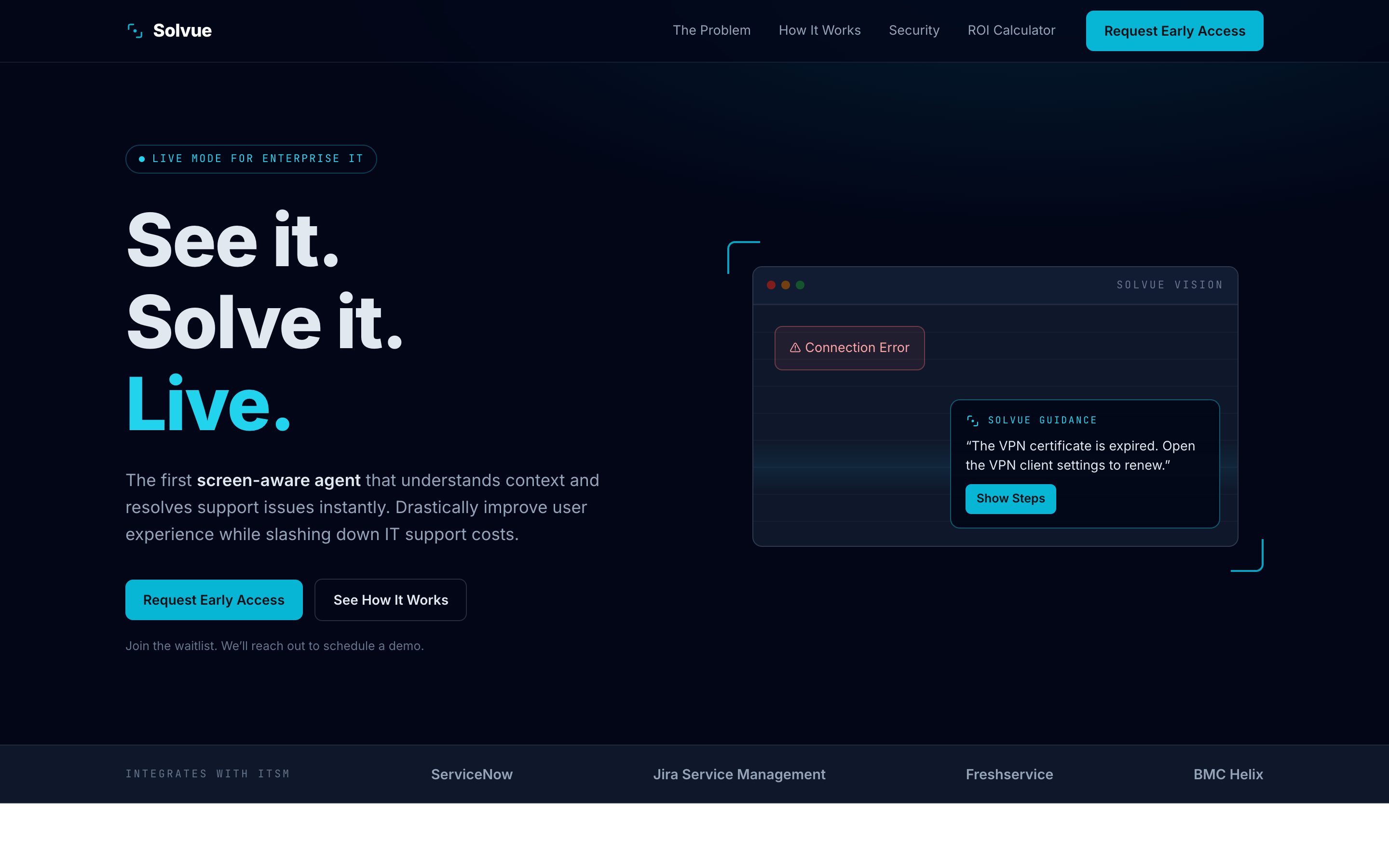
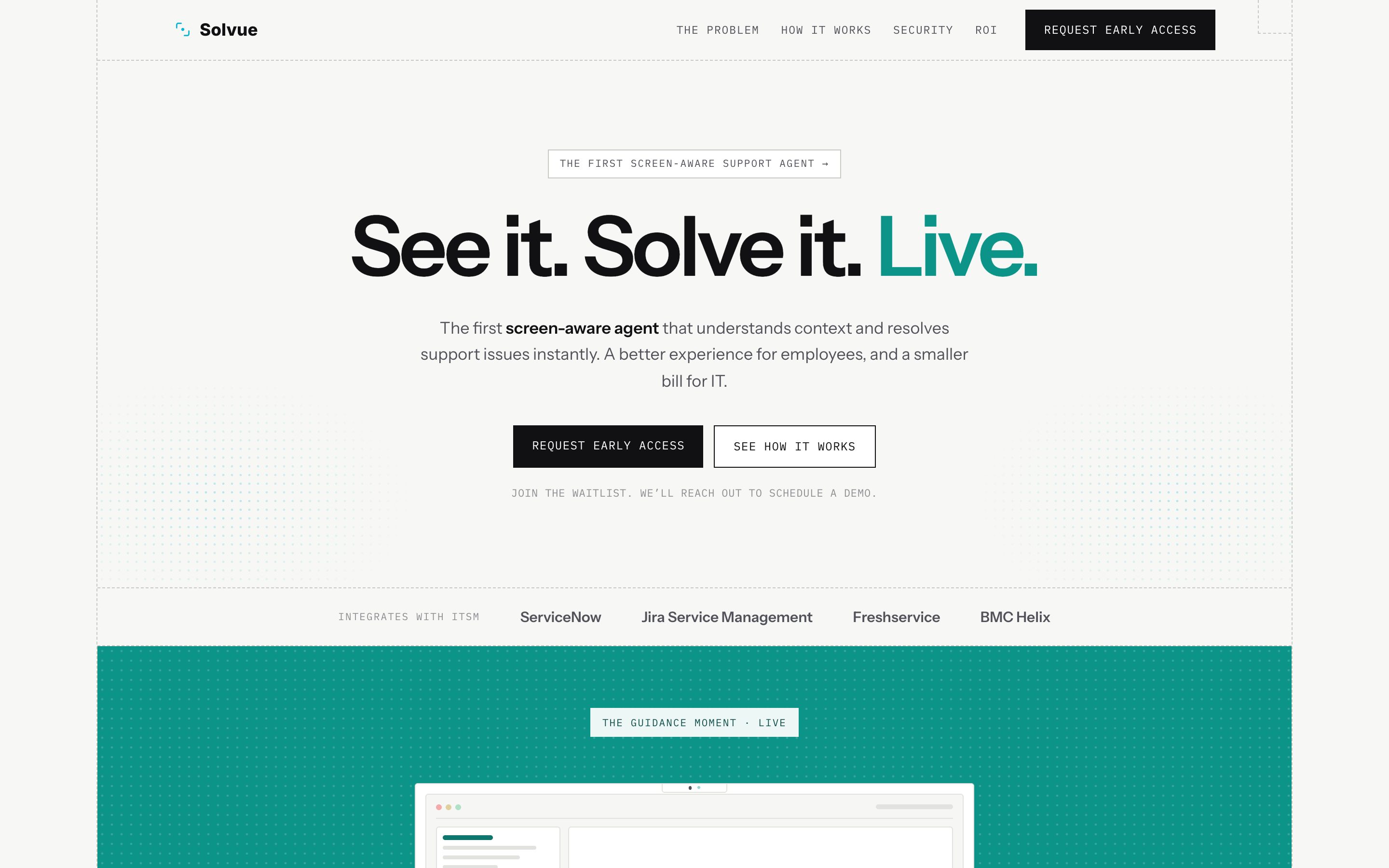
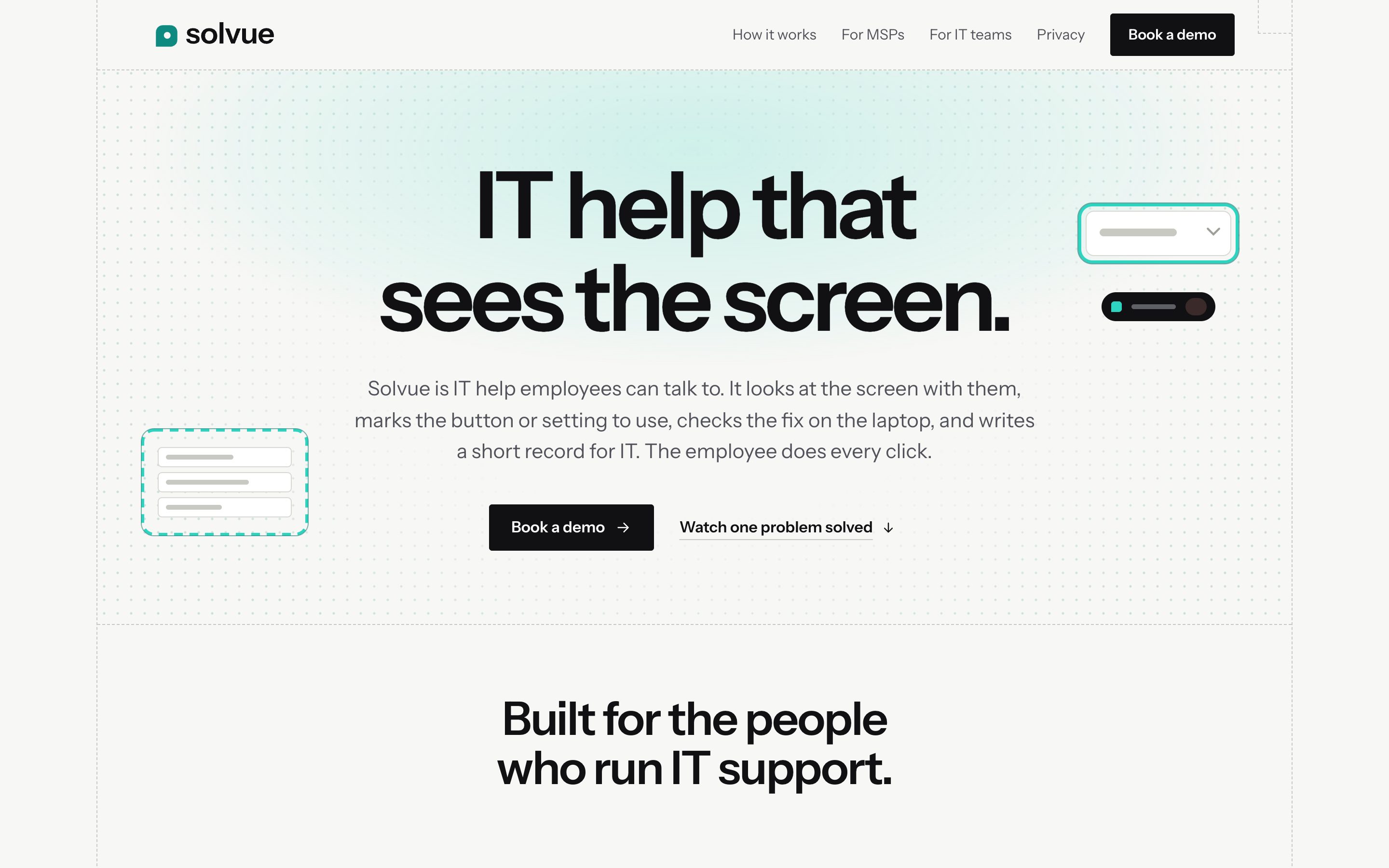
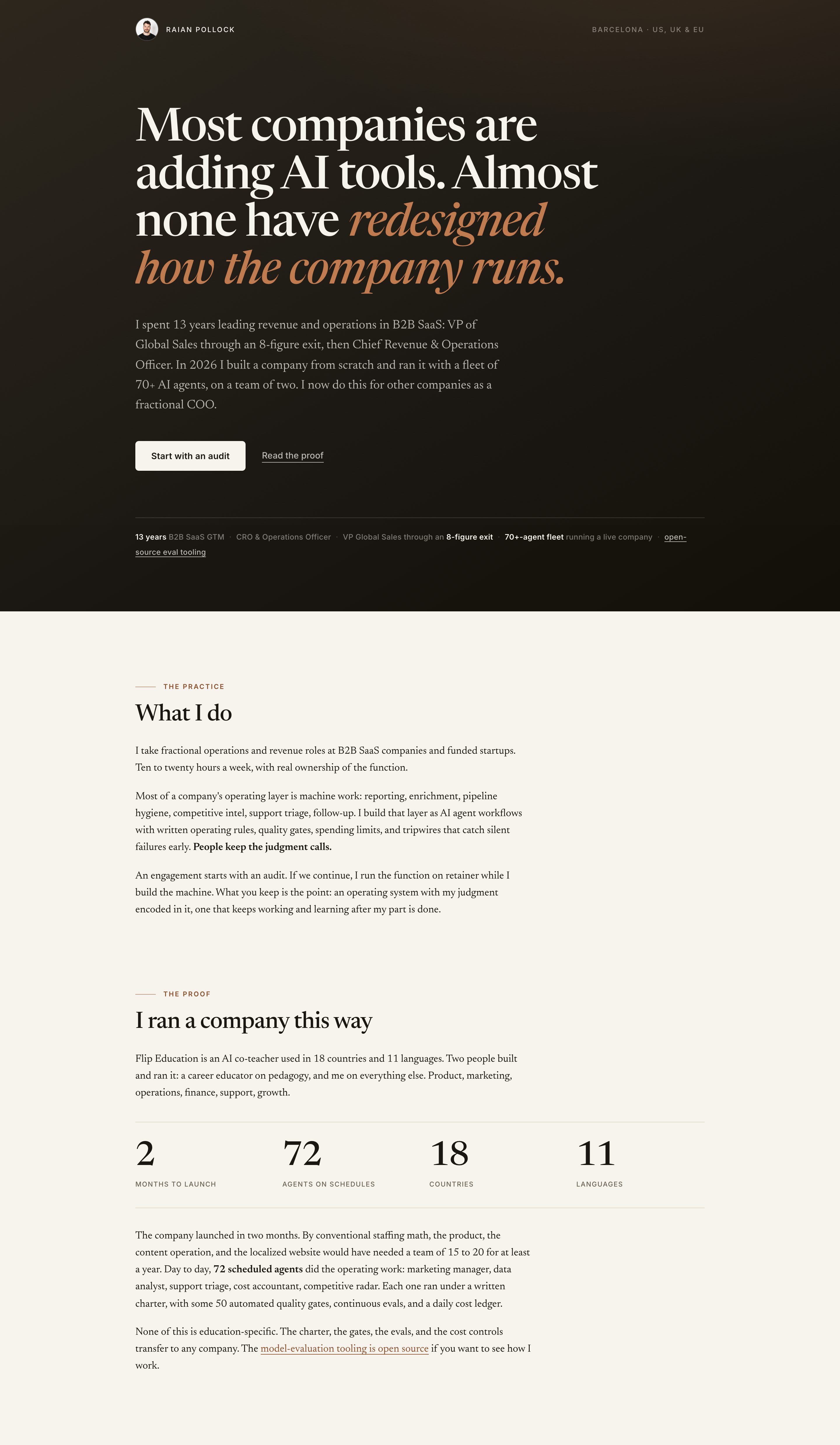
This site, raianpollock.com, works the same way. I asked for a full redesign one day around midday, four design directions were ready within the hour, and the new site went live the next day. Solvue is an AI product for IT help desks whose website I built. There, four design directions were built as full pages in a single afternoon, and the choice was made the same day.

What it would have cost
For a normal overhaul like this, the estimate from published pay and agency prices is three to six months of work redesigning and building the homepage and the main page types. An in-house team in Spain would run roughly €30,000 to €158,000 in employer cost, an agency about €35,000 to €132,000. The AI tools ran on a subscription, so the main cost was my own review time.
What I would keep, what I would change
I would keep the automatic checks and the one design system; they carry the quality. What I would change is my own expectation at the start. The call I got wrong was how much review the earlier models needed. In an earlier round, a few months back, a project I expected to be easy took more than a week of my own time. Now the models get close to right in one pass, so that cost has dropped a lot. It was still worth it.
What the setup needs
For most websites, two parts do the work. The first is an AI coding agent like Claude Code, the tool that writes and changes the site's code. The second is a host like Cloudflare, whose network serves pages to visitors around the world, using Cloudflare Pages, its service for hosting a website. This site runs exactly that way. Flip Education went with Vercel instead, because of how it serves pages and because the project is large. Getting there depends on where you start. An existing site on a website builder most likely has to migrate, meaning move off that platform into code, unless you're happy with the AI plugins it now offers. A brand-new site is super easy to start this way.
Advice for the team doing this
If a team runs a site this way, each team should change the part of the site it owns, as long as its changes can't break another part. The team that owns the website, usually marketing, gets access to all of it, and other teams get narrower access. Being found in search engines stays a shared concern, because a change made in one place can affect the rest of the site. Where I'd say don't do it: very large sites like a global online shop, sites where many people who don't work with AI agents edit pages daily, and anywhere every change needs a formal approval trail. For most startups and scale-ups, some form of this works, with rules on who may change which part, and the checks every team's change must pass.
Sources
Receipts. The Flip Education site is built with Next.js, a web framework, hosted on Vercel, and the code was written with Claude Code, Anthropic's AI coding agent. Key dates: the April 2026 release, the June 2026 round, and the September 2026 round.